
A sit down w/ Miss America
Meet Miss America, the artist persona of digital performance artist, Rickyah Renée Blake. During this exchange, Rickyah interrogates Miss America on her inspirations for her latest works. This interview works to resolve the critical reflection element of my online platform.
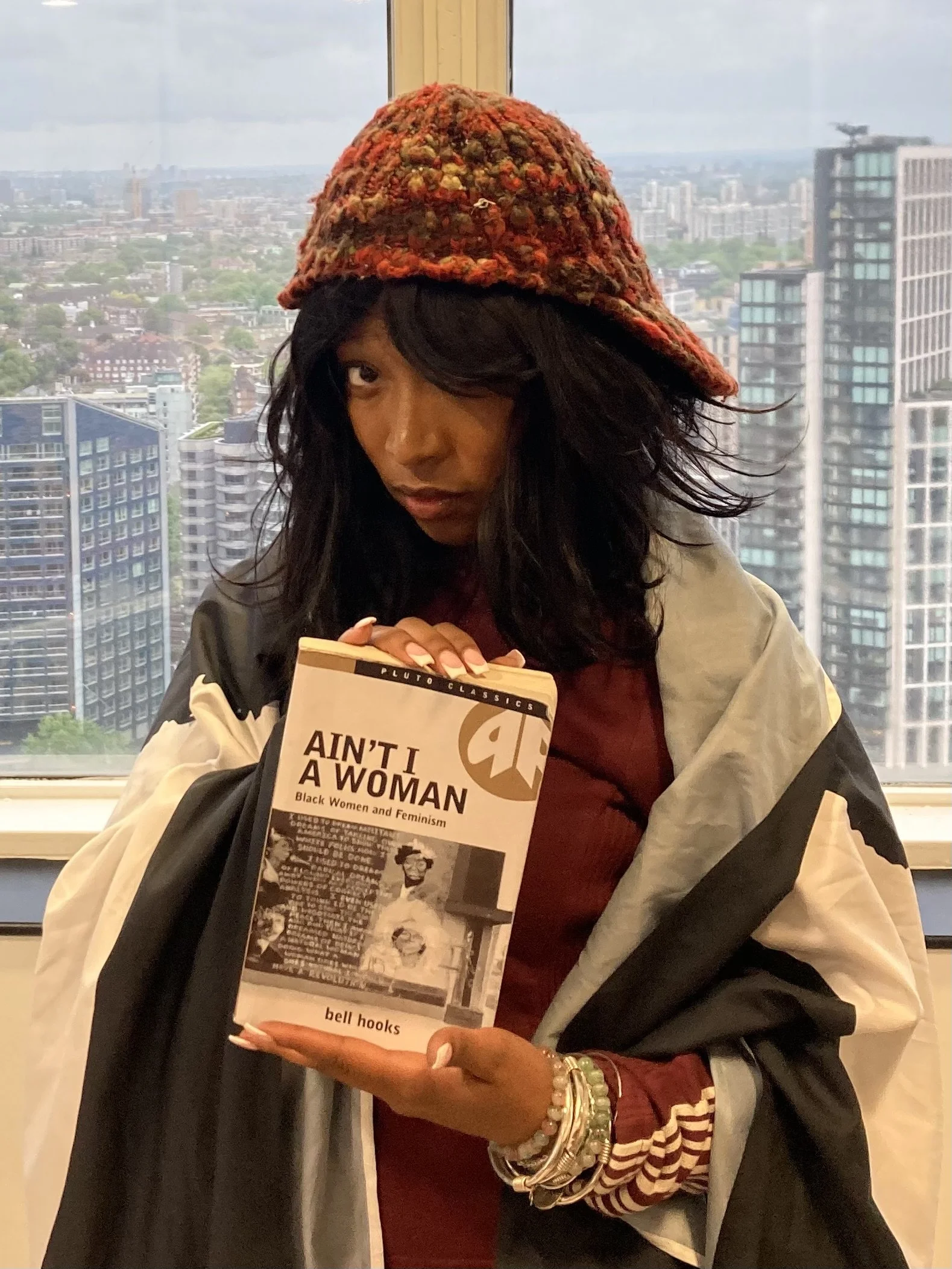
Miss America is a digital performance artist originally from Brooklyn, New York now studying at Camberwell College of Arts, UAL in London, UK. She is in her final term on her pursuit of a MFA in Comp Arts. This interview takes place at Miss America’s new art studio in Hackney Wick, London. She is asked to reflect on her identity and art practice + research and works for Unit 3.
RB: Introduce yourself and your practice
MA: I’ll start with a proper introduction of my name. My first name is Rickyah, as an Ode to my father, from my mother, whose name is Ricky. When I was younger, I’d always use his name as a hint to people on how to spell my name. “It’s Ricky and an a-h” I said to avoid confusion. Roll-call every first week of school was hell. And to be frank my time at UAL hasn’t been pleasant either. For clarity, my name is pronounced (Ra-ki-yuh) It confuses me what makes it so difficult to pronounce. What makes my culture/heritage and our names more difficult to comprehend versus others? My first name is followed by my middle name that I share with my grandmother, Renee. What my surname is has no place here, in my world. Nor do I have the energy to educate you on why that is. This is what I mean by a proper introduction. I wish we had the opportunity to do that more. To provide context. Unfortunately, this context has become more of an explanation for your negligence, your refusal to acknowledge my difference. I’ve accepted it, and enabled you to be this way. Moving on, I was born in St.Louis, Missouri, a city in the midwest, but I grew up in Brooklyn, New York where my mother’s side is from. Middle America and the East Coast are culturally different, it gave me a wider spectrum on the Black American Diaspora. On my mother and father’s side, we’ve been in America for centuries. Throughout that time, Black Americans have cultivated a culture that's transcended globally. Our style, aesthetics, the way we walk, the way we talk, it's all in me. There are times where I feel dismissed, and rejected by the world, as if we are America’s step child, forced to seek validation. Sometimes I feel like I am constantly proving myself to be real, to feel, yes I bleed, it's true indeed. You want to see?
And this is where my art practice comes in.
RB: Describe your art practice.
MA: I am a digital and performance artist. I like to use digital art to generate a setting while using performance for storytelling. When I think about being an artist, I think of myself as a teacher. My job is to educate you on who I am and my view of the world. However my work isn’t just about that. It’s not just about identity. It's offensive to see a Black artist's work and categorize it as a work about identity because it explores an African perspective or history. We are not a monolith. Oftentimes in my work, I’m exploring the experiences of other Black Americans, common tropes and caricatures. I’ve practiced performing since I was a young girl, from acting, playing instruments, dancing, and spoken word. Since my time at Camberwell College of the Arts, my works have evolved.
RB: How has your time on the computational arts pathway shaped your performance practice?
MA: When I think about computing, I think of the human brain as the blueprint. I see computers as machines that mimic human behaviour. I use performance as a way to simulate human computation and thinking, drawing a comparison between how computers behave. I believe that we too have been programmed. AI Chatboxes are an example of this, because it is a collection of human perspectives programmed. In my work, I explore game theory and simulation theory, two concepts where life can be perceived as a bounded reality with fixed inputs and creative outputs. In other research, the programmers can be referred to as deities, aliens, and beyond. Through examining my brain and the brains of others in a historical context, I am examining the human psyche and common outputs based on fixed inputs.
RB: How does your work contribute to the larger world of computational arts?
MA: There are collectives of performers that implement interactive art and live surveillance, like The Wooster Group and Blast Theory.
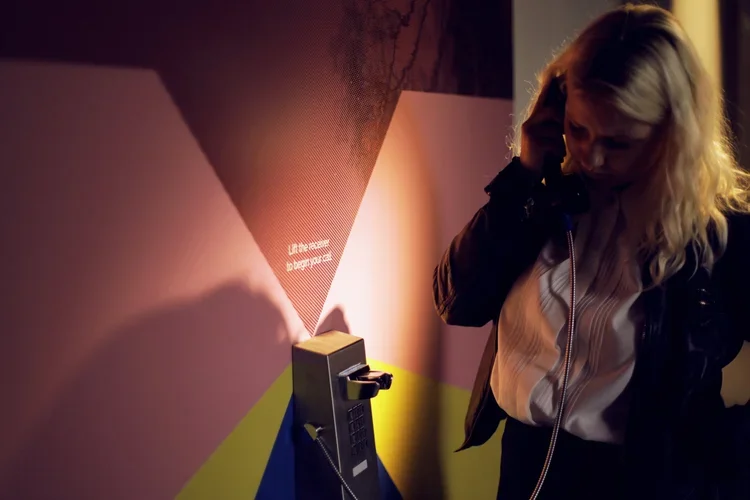
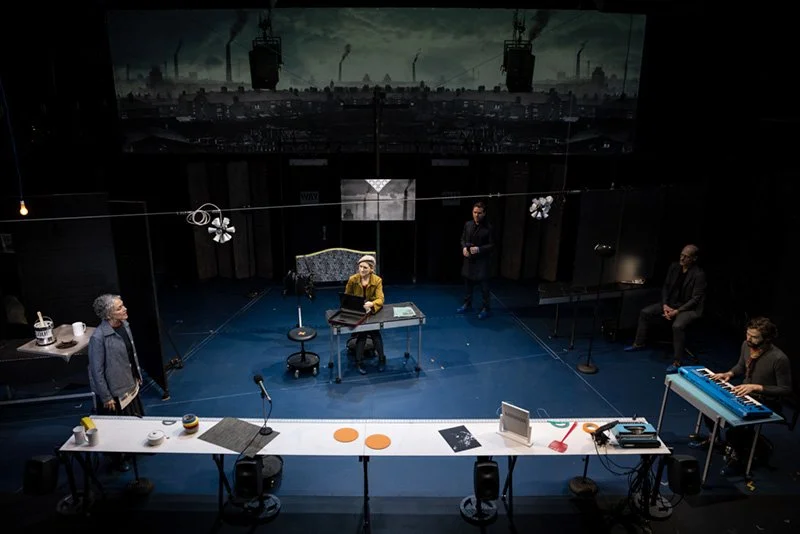
RB: What is the significance behind the name Miss America and how does this influence your work?
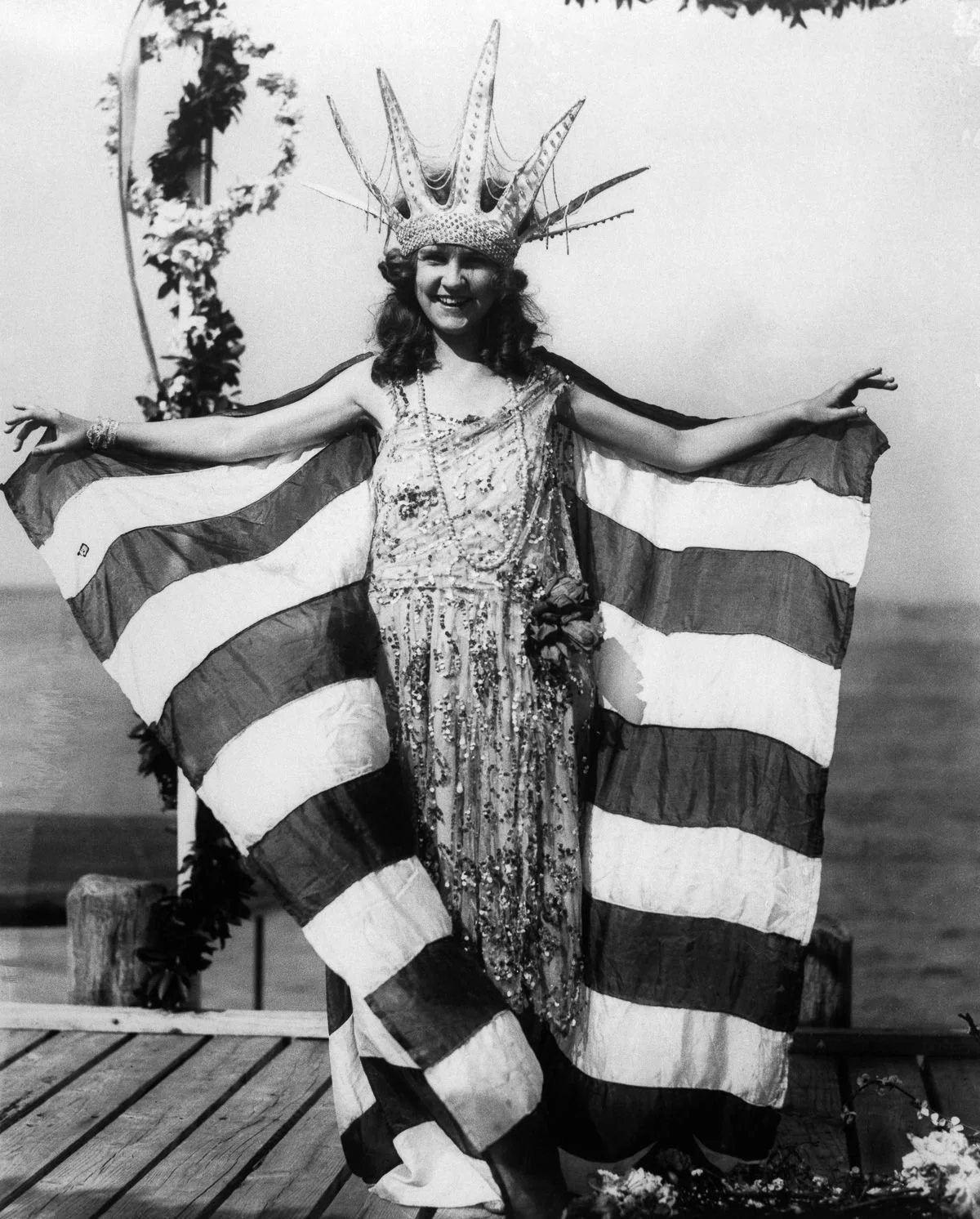
MA: Miss America, a pseudonym. The artist name “Miss America” is inspired by the national pageant contest that started in 1921, and continues to be a beauty competition for American women from age 18-28. Since 1921, there have only been 8 African American women who have won the title of Miss America. Despite it being clear to me I may not look like the prototype of an American woman, I am still Miss America. My ancestors are responsible for America’s success and culture. I won’t allow society to ignore my contributions and my community’s contribution. What makes me less of an American?
I am of Black American heritage however I feel so disconnected to the image of what an American woman is. Naming myself after the country I was born in is a part of me reclaiming my identity.
RB: What are the key themes, subjects, and objectives of your research?
RB: Key themes in my research involve pain, suffering, religion and symbolism. I am trying to process the psychological phenomenon that humans desire pain and suffering. This expands into religious ideologies such as Buddhism that challenges our relationship with pain as a species and gives recommendations on how to be free from this thirst. I am fascinated by religion as a means of freedom from this desire. In spiritual and religious practices
In my research for Unit 3, I am exploring simulation theory and tenets of Gnosticism as it relates to the Black American social and political power dynamic.
The subjects of my research involve
Reflecting on the potential of simulation theory being a valid lens to look through when examining the human condition.
Deciphering The Matrix theory through identifying key players and systems
Defining role of The Black American woman in The Matrix and “simulation”
Processing my experience as a Black American woman and sometimes victim on unfair gameplay
Examining race, gender, and class as social codes that are shaped our simulated reality
Investigating the relevance of symbolism and Occult knowledge determining whether the world is a simulated reality
The objectives for Unit 3 are:
Use live performance as a method to reconcile with my relationship to pain and suffering as a Black American Woman in a simulated reality
Challenging simulation theory and seeking spiritual knowledge as a means for reasoning
Exploring my identity, and comparing my internal perspective to the way I believe world perceives me and whether that holds any weight or not
Through live experiments, I aim to test human responses to constraints and public pressure against their desire to see pain and suffering.
Taking control over the laboring of my body through setting the terms for how it used by providing boundaries for viewer behavior
Using symbolism to build a narrative that connects to deeper truths, also known as “Secret History” that guide much of thoughts on the world and why it is the way it is
My subjects and objectives will continue to be pursued through my research project titled “Build or Destroy”
RB: What are the relevant texts that supported your research?
MA: works for Unit 3. For Unit 3, I spent time reading texts by theorists who explored esoteric knowledge and listened to lessons given by religious and spiritual leaders who practice these theories.These works established the foundation of my research question “If life is a simulation then what am I?”. I worked through defining the term ‘simulation’ in a scientific and spiritual context. I found references to similar themes of unseen forces, patterns, and predictions that inspired the aesthetics in my works.
I first started my pursuit with looking into tenets of Gnosticism. I found an essay on Gnosticism titled ‘’’’, detailing the origins of gnosticism and its key beliefs. I have always heard of Gnosticism but I wanted to learn more about the movie The Matrix, and found an interview of the Matrix’s original storyteller, Sophia Stewart (Gray 2013). Her inspirations come from early Gnostic beliefs and opened the door for my study into simulation theory.
A key text I examined is “The mystery of the ages contained in the secret doctrine of all religions”, which introduced me to the term theosophia. Theosophy can be defined as a spiritual movement from the 19th century that references esoteric knowledge, western traditions, and Eastern religions like hinduism and buddhism. The author is making a claim of connectivity in all things. This is the common thread I started out pursuing in Unit 1. Through examining this text, I found a resolution for my inquiry into the occult and what I already knew to be Spiritual Science. This text forced me to think more about symbolism in my work, and how I convey my spiritual beliefs through my performance practice. What do I believe and what do I want others to believe?
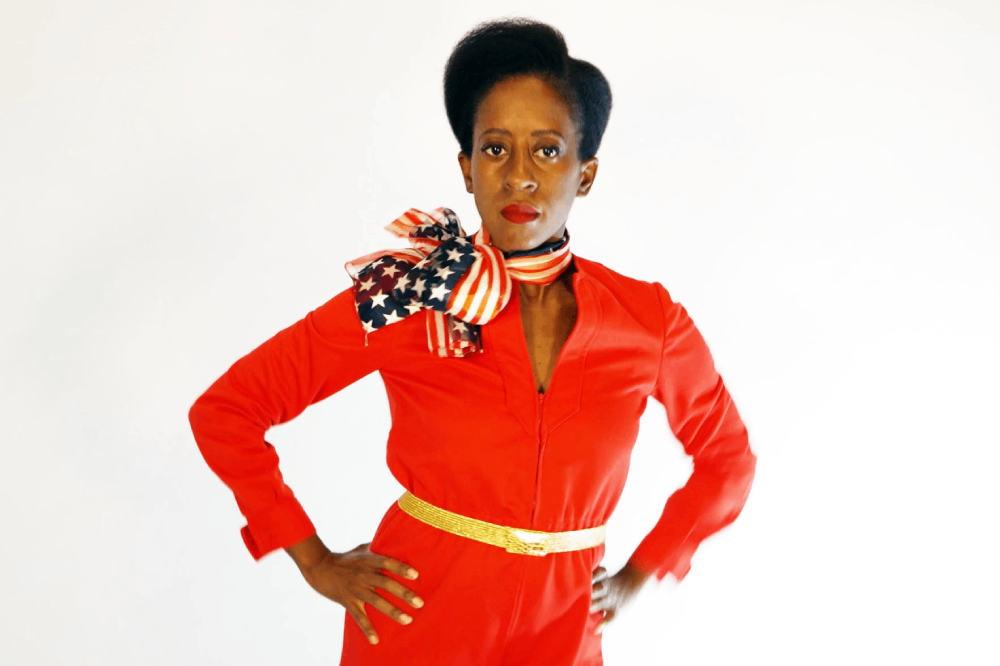
In a pursuit to answer these questions, I dug deeper into the use of symbols in our society and what those symbols represent, leading me to the YouTube page of Professor Jiang Xueqin. I’ve watched over 10 of his videos discussing Secret History and Social Theories he discovered through his own research. He uses game theory to make political predictions that have proven to be right in some instances like the United States decision to bomb Iran in 2025 (Xueqin 2025). Xueqin’s insight furthered my insights on the programming of the human brain. The United States and its aesthetics is a huge inspiration for my work, drawing on the country's early beginnings before and after European settlement. In American Showgirl, I’m dressed in Red, White, and Blue dancing to Gil Scott-Heron’s The Revolution Will Not Be Televised to reference its origins (Heron 1971). I wear my countries colors patriotically as the figure for American culture, a strong, powerful Black Woman whose role in American life has been reduced to the help.
These texts and reflections on esoteric knowledge helped me to begin finding the oneness in all universal beliefs. I worked closely with theories from Western and Eastern traditions and their belief systems seemed to have more in common than different. The information presented gave me an opportunity to analyze the commonalities and decide on centering my work around the commonalities or differences. Using what was gathered from these texts on symbols and unforeseen forces inspired the dialogue in my Unit 3 work, Attention Whore. To conclude, I am using archival and historical research to further develop my response to simulation theory, the threat of death, and the pursuit of life.
RB: What are the relevant artists and their works that you referenced in your Unit 3 works?
MA: For my resolved works for Unit 3, I have two digital performance pieces and one digital art piece. The works presented in Unit 3 discuss the consequence of my Blackness. Through reviewing the works of other Black artists, I can examine the modes of refusal and objection to a simulated reality that places Black people at the bottom.
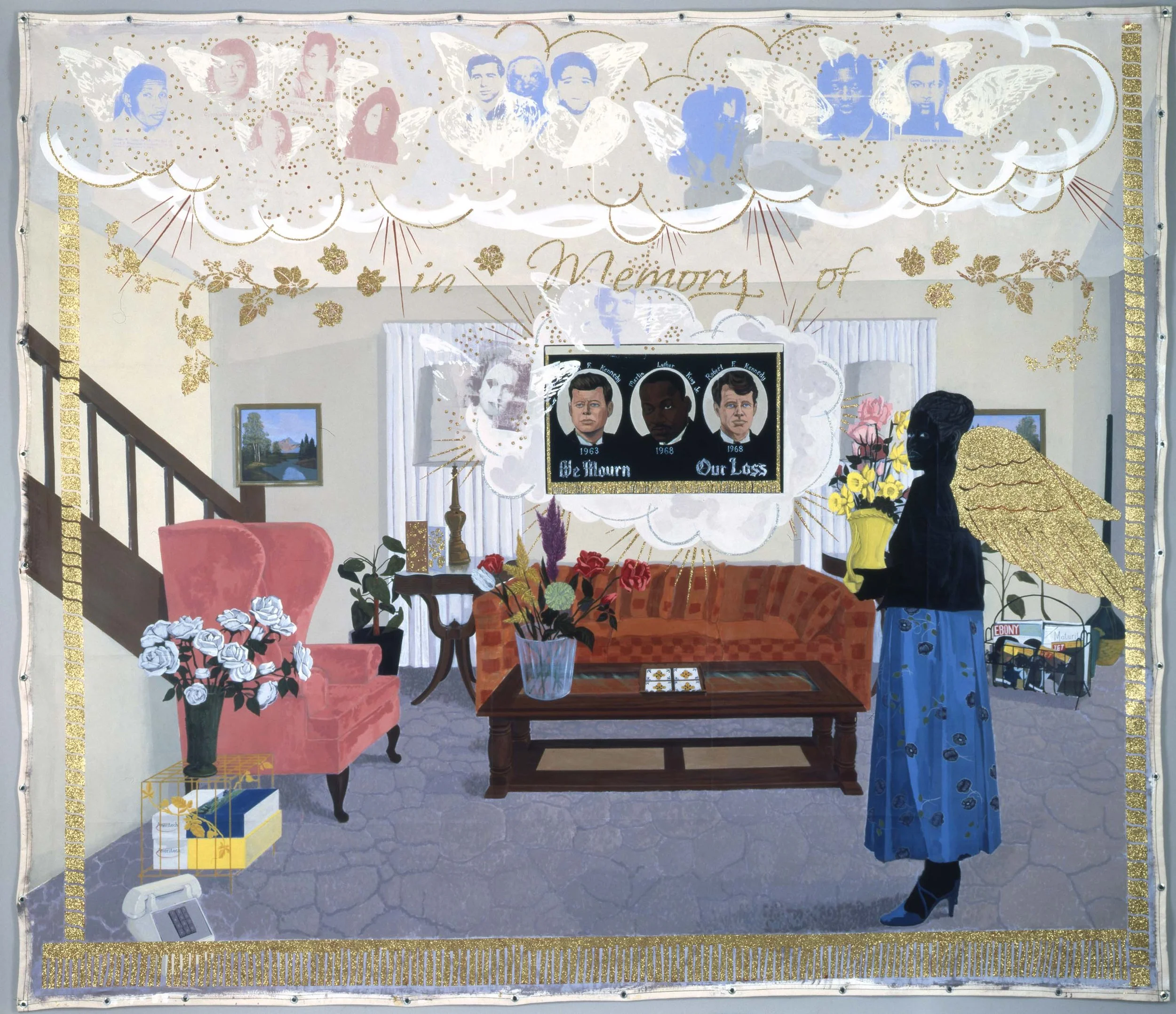
My digital art piece was commissioned and inspired by the community discussion held by the community organization surveying Black women of systems of post-birth aftercare. I used Kerry James Marshall’s Souvenir II as my main reference in It Takes A Village. The living room setting, color palette, and textures created through painting and collage, I worked to implement into my digital painting.
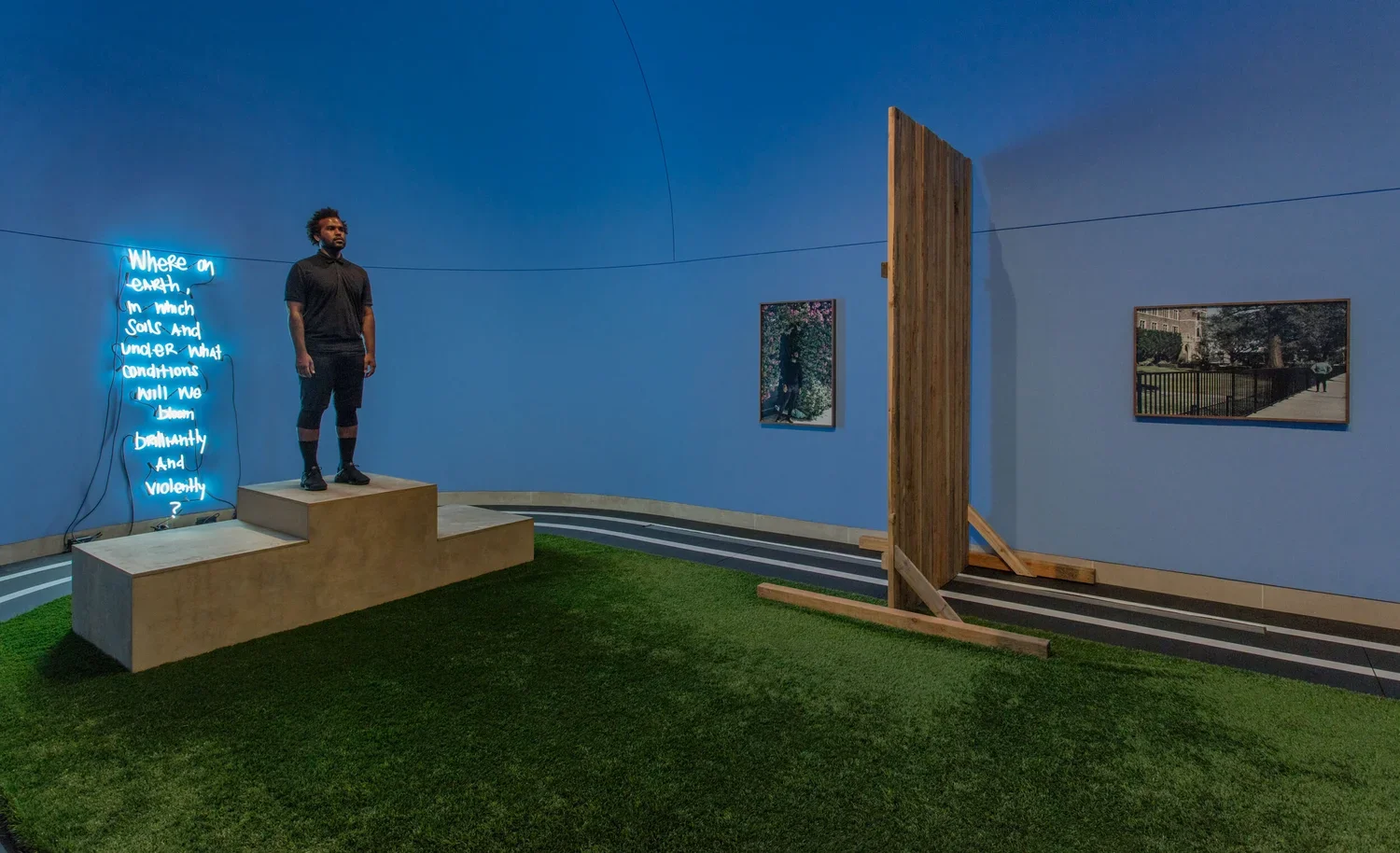
For Attention Whore and the work I plan to showcase at the research festival, I am giving a nod to the works of artists like Adrian Piper and E.J. Hill, who use performance as a point of refuge from racial oppression. EJ Hill is an American artist with a history of working on performances drawing on media/technology to explore visibility and Blackness. Hill’s durational performance works reflect the hardships that Black, Brown, and queer bodies are forced to endure. In his work “Excellentia, Mollitia, Victoria” a durational performance that lasted 78 days, Hill insists that we look at how our society’s deeply held prejudices and inequalities impact our relation on what bodies are deserving of pain (Hammer Museum, 2018). I address similar concepts in my research festival that is coupled by a durational and endurance performance allowing my body to be subjected to the will of spectators.
Adrian Piper’s work has also been a source of inspiration, but also contention. In her The Mythic Being series, Piper embodies the stereotypes that people have about her and other Black people. In the Mythic Being, The Mythic Being series because changing her race, sex, and social class in order to experiment in public situations and gauge people's reactions shed light on discriminatory bias.
Despite my aims in Attention Whore to be similar, I find our entry points to be different. I want to differentiate that there is a difference between the Black American identity and the mixed-race American identity. I can confirm that there are common themes of oppression and ostracization but there are some gaps in understanding. For instance, in Piper’s work, she often grapples with the privilege of being white-passing. I could never pass for a white woman, so our expressions differ.
In another one of her works, Piper’s piece “Some Reflective Surfaces” (1975-76) where she performed at the Whitney Museum of American Art dancing to Aretha Franklin's "Respect," staged with video feedback, and audio recordings (Piper, 1975)worked to influence the stage aesthetics and script presented in American Showgirl.
American Showgirl was inspired by the work American Woman presented by Holly Bass at the National Smithsonian of Art in Washington, D.C. in 2021 (Smithsonian 2021). I had the opportunity to see this work in person and was moved by Bass's depiction of American womanhood moving through the generations. In work, American Showgirl I leaned into these concepts of Black feminism, Black American Patriotism, and their symbols. My intention was to interpret Bass’ work in a modern context of sexual objectification and exploitation of Black performers.
RB: How are your work evolved from Unit 2?
MA: Since Unit 2, I have nailed down the key themes I enjoy exploring in my research: Ancient Symbols, Secret and Occult History, and Theology. I’ve evolved from the themes of Mass Media, Surveillance Capitalism, and Conspiracy Theories. In Unit 1, I attempted to find the thread between these subject matters but got a bit lost in what my specific interests were. Through more research, more practice, more exploring, I’ve identified the key subjects of my practice. The most relevant is what impact does these themes have on the Black American identity. Using the Black American experience as the main subject in my work has given me a clearer direction. When spectators view my performance, I want them to leave with a fuller understanding on what it means to be Black American, once enslaved and still disenfranchised. To me there’s a connection between prophecy, secret society, and knowledge and the condition of the former enslaved African American. I am using this research to grapple with the existence and circumstances of a Black American woman.
Prior to Unit 3, I was still a bit confused on how to properly conduct research for my art practice. I knew how to conduct academic research but struggled to transfer those skills into my work. I was stuck on identity but unclear on what I wanted to communicate about it. However through public space and community discussions about my art, I’ve grown a deeper understanding. My research themes are guided by the Black American experience with the objective to find justification for my pain and suffering.
RB: What does your future work look like?
MA: I’m really excited about future projects. I am expanding upon the “Build or Destroy” research project that I am starting on in Unit 3. My intention is to develop my work more through a disciplined practice of research and technical development. I see the technical computing of my work improving. I want to develop better skills in 3D modeling to create more interactive visual elements to support my live performance. I know the more immersive the performance experience can be for spectators, the greater impact I can have. I want to fully bring viewers into my world by stimulating multiple senses and computing. From Unit 3, I really enjoyed American Showgirl, and the use of historical research to present a different narrative. I want to continue to repurpose my research into a visual expression making the subject matters more accessible to folks in my community. As a new performer, I am feeling called to cause more public spectacle around my work. I need to get outside, and get the people talking. So I will be exploring more public performances. I have ideas to project narratives onto my body as a digital ad, using my likeness as a billboard. There is more to explore within the current themes of my research. There are concepts I plan to test in front of a live audience. I want to do more work and create more engagement online and in real life to establish a strong brand for myself as an artist. I see my work being featured at media and performance festivals and in institutions that support performance practices.
References
Academia.edu (n.d.) Bookmarks. Available at: https://www.academia.edu/bookmarks?from_navbar=true&trigger=nav(Accessed: 5 November 2025).
Driscoll, J.T. (1912) Theosophy. In The Catholic Encyclopedia. New York: Robert Appleton Company. Available at: http://www.newadvent.org/cathen/14626a.html (Accessed: 5 November 2025).
Scott-Heron, G. (n.d.) ‘The Revolution Will Not Be Televised’. History Is A Weapon. Available at: https://www.historyisaweapon.com/defcon1/herontelevised.html (Accessed: 5 November 2025).
King’s College London (2022) Art-based methodologies and inclusive practices, by Donata Puntil. London: King’s College London. Available at: https://www.kcl.ac.uk/assets/research/project-upload-2021/art-based-methodologies-and-inclusive-practices-by-donata-puntil-november-2022.pdf (Accessed: 5 November 2025).
Newcastle University Library Guides (n.d.) Research methods. Available at: https://libguides.newcastle.edu.au/researc.(Accessed: 5 November 2025).
Social Change UK (n.d.) Creative research methods: Knowledge Hub. Available at: https://social-change.co.uk/files/Knowledge_Hub_-_Creative_Research_Methods.pdf (Accessed: 5 November 2025).
Teen World Arts (n.d.) Marina Abramović: The artist is present. Available at: https://teenworldarts.com/magazine/marina-abramovic-the-artist-is-present (Accessed: 5 November 2025).
Study.com (n.d.) Gnosticism: Definition & history. Available at: https://study.com/academy/lesson/gnosticism-definition-history.html (Accessed: 5 November 2025).
Performance Art Resources (n.d.) What is performance art, live art, and action art?. Available at: https://performanceartresources.com/home/what-is-performance-art-live-art-action-art/performance-art-live-art-action-art-literature-books-information-and-more/durational-art/ (Accessed: 5 November 2025).
Pinder, J. (n.d.) The art of Black endurance. Available at: https://www.jeffersonpinder.com/the-art-of-black-endurance(Accessed: 5 November 2025).
Bostrom, N. (2003) Are you living in a computer simulation? Available at: https://simulation-argument.com/simulation.pdf (Accessed: 5 November 2025).
Artist/Works
Abramović, M. (1974) Rhythm 0. [Performance]. Explores endurance and the body as both site and subject.
Alok Vaid-Menon (n.d.) Performance poetry and activism. [Performance/Spoken word]. Interrogates race, gender, and capitalism.
Bruguera, T. (n.d.) Performance works. [Performance/Installation]. Critiques colonialism and authoritarianism.
Cassils (n.d.) Body as sculpture. [Performance]. Tests endurance through bodybuilding and self-inflicted constraints.
Fraser, A. (n.d.) Performance works. [Performance]. Embeds critique of labour, institutions, and audience complicity.
Haacke, H. (n.d.) Institutional critique. [Conceptual art]. Exposes art’s capitalist and political entanglements.
Hartman, S. (2008) Critical fabulation. [Conceptual framework]. Informs artistic practices that rewrite archives and histories.
Hill, E.J. (n.d.) Performance works. [Performance]. Engages media and technology to explore visibility and Blackness.
Hsieh, T. (1978–1986) One Year Performances. [Performance]. Explores survival, time, and endurance.
Lacy, S. (1990s) The Oakland Projects. [Community-based performance]. Addresses race, class, and social change.
O’Grady, L. (1980) Mlle Bourgeoise Noire. [Performance]. Disrupts art institutions through embodied critique.
ORLAN (1990–1993) The Reincarnation of Saint ORLAN. [Performance]. Uses plastic surgery to interrogate beauty, pain, and identity.
Phillips, R. and Black Quantum Futurism (n.d.) Performance installations. [Performance/Installation]. Draw on ritual and time travel to reimagine temporality.
Pinder, J. (n.d.) The Art of Black Endurance. [Performance]. Explores identity and resilience through durational acts.
Piper, A. (1988) Cornered. [Performance/Installation]. Interrogates race and identity, grounded in the artist’s personal experience.
Pope.L (2001–2009) The Great White Way: 22 Miles, 9 Years, 1 Street. [Performance]. Embodies Black precarity and endurance through a crawl across New York City.
Shange, N. (1976) For Colored Girls Who Have Considered Suicide / When the Rainbow Is Enuf. [Choreopoem/Play]. Blends performance, poetry, and activism.
Steyerl, H. (2013) How Not to Be Seen: A Fucking Didactic Educational .MOV File. [Video essay]. Critiques digital surveillance and visual culture.
Sun Ra (1970s–1990s) Cosmic performances. [Music/Performance]. Imagines alternative Black futures through Afrofuturism.
Walker, K. (n.d.) Visual artworks. [Installation/Drawing]. Explores slavery’s visual legacies and racial memory.
Wilson, F. (1992) Mining the Museum. [Exhibition]. Rearranges museum collections to expose racial hierarchies